The real problem isn't the ground... but what's on it.
Before considering a costly replacement or hiring a professional, it's essential to understand one crucial point: in most cases, the floor isn't damaged. It's simply covered with successive layers of residue. And that's precisely where the key lies.
There's no point in trying to make it shine at all costs or rubbing vigorously. What's needed is a deep, gentle, and methodical cleaning to remove that invisible patina that dulls the overall appearance.
The simple trick that brings a dull floor back to life
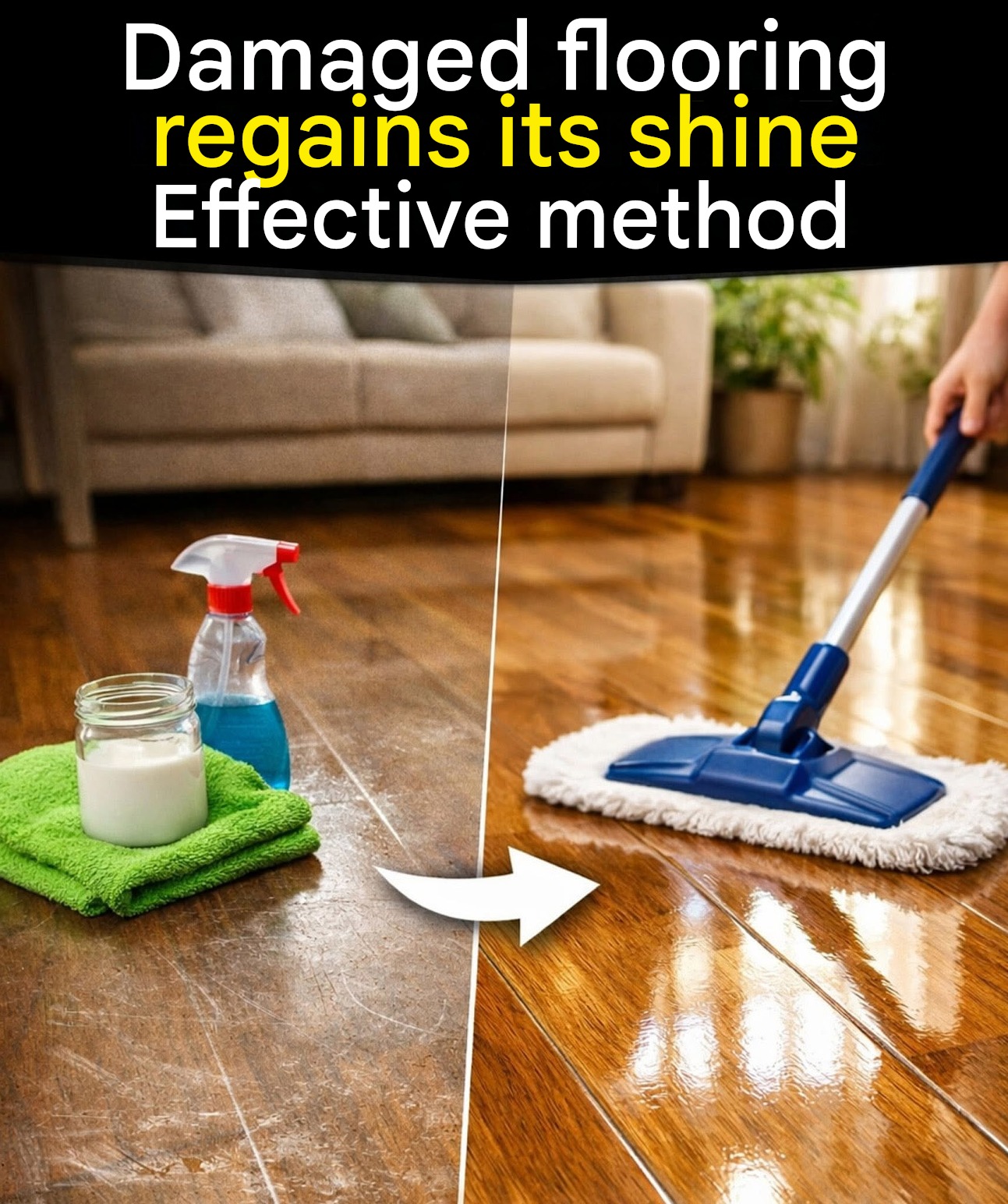
The key is to use a regenerating cleaner suited to the type of flooring, combined with baking soda , and above all, to apply it correctly. Don't rush: this cleaning takes a little time, but the result is often spectacular.
- Start by diluting the product exactly as directed , without ever increasing the dosage.
Generally, use 2 liters of lukewarm water , 1 capful of regenerating cleaner (approximately 30 ml ), and 1 level tablespoon of baking soda . Mix thoroughly until completely dissolved. - Work in small areas , approximately 2 to 3 m² , to maintain control and prevent the product from drying too quickly on the floor.
- Leave for a maximum of 5 to 10 minutes : the goal is to dissolve accumulated residue, not to scrub vigorously. If necessary, very lightly mop with a damp mop to distribute the product evenly.
- Next, use a clean, well-wrung mop to remove the loosened dirt, then rinse thoroughly with clean water (without product), changing the water as soon as it becomes cloudy to avoid redepositing residue.
If the floor is very dull, it's perfectly normal to have to repeat the process a second time , after it has completely dried. Each pass removes another layer of deposits and gradually brings the floor closer to its original appearance.