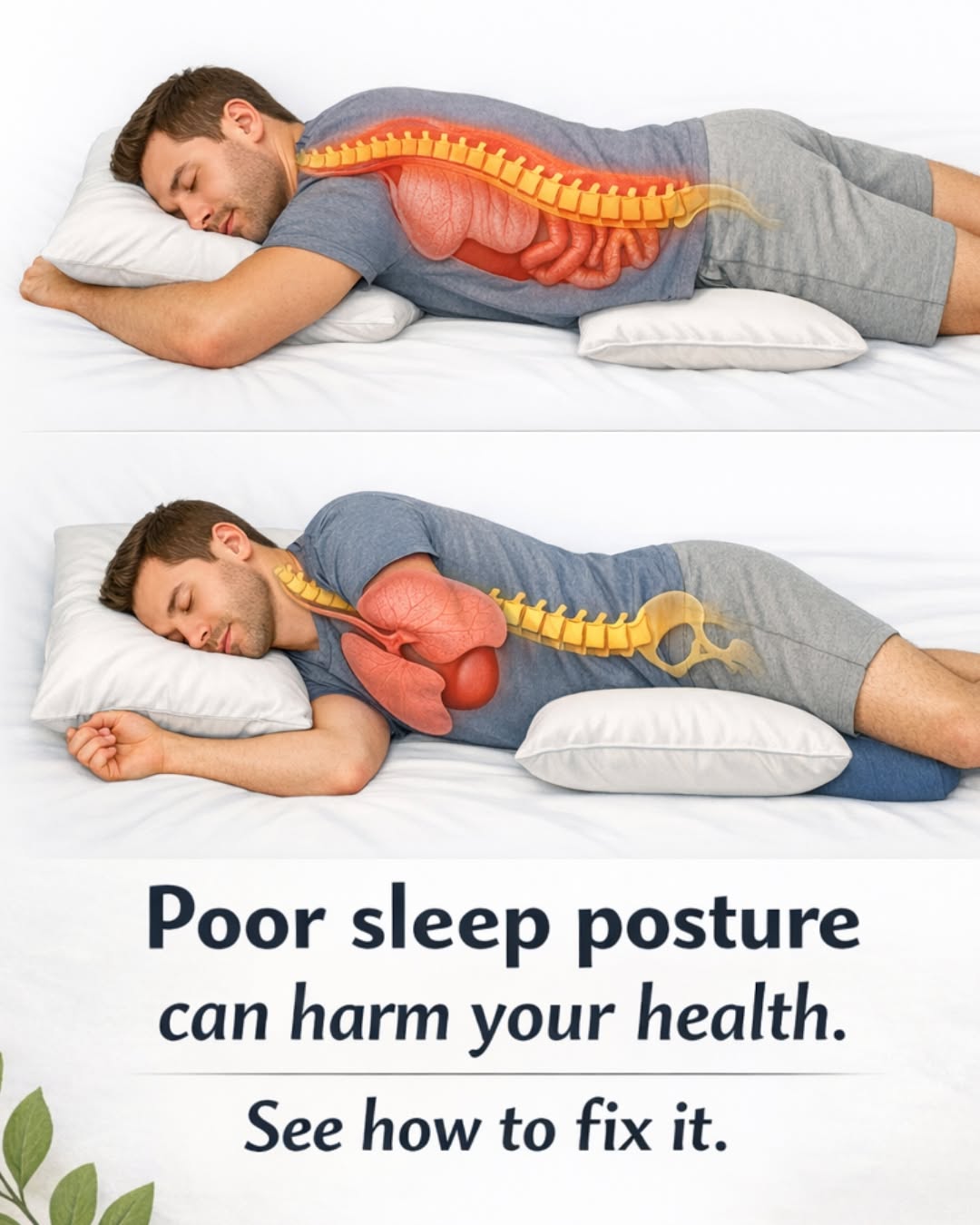
First, it helps with digestion. The stomach and pancreas naturally hang toward the left side of the body, so lying on that side makes it easier for food to move through your digestive tract. This is why many people notice less heartburn and reflux when they switch to the left side.
Second, it supports better circulation and lymphatic drainage. The lymphatic system, which helps remove waste from the body, drains more efficiently when you sleep on your left side.
Third—and this is especially interesting—sleeping on your side appears to support the glymphatic system, the brain’s “clean-up” system that removes waste products during deep sleep. Better drainage of these waste products may help reduce the long-term risk of neurodegenerative diseases like Alzheimer’s.
For pregnant women, the left side is often recommended because it improves blood flow to the placenta and helps reduce pressure on major blood vessels.
In short, if you’re looking for a default “healthy” sleep position, the left side is one of the best places to start.
Other Sleeping Positions and Their Impact
Sleeping on Your Back
Back sleeping can be comfortable and, in some cases, good for spinal alignment. However, it has a big downside: it can make snoring and sleep apnea worse.
When you lie on your back, gravity pulls the tongue and soft tissues of the throat backward, narrowing the airway. This reduces oxygen flow and increases the chances of snoring and breathing pauses during sleep. If you often wake up with a dry mouth, headaches, or feel exhausted despite enough sleep, your back-sleeping habit might be part of the problem.
Sleeping on Your Stomach
This is usually the worst position for your body. Sleeping face down:
Twists the neck to one side for hours
Compresses internal organs
Puts stress on the lower back
Makes deep, relaxed breathing harder
Over time, this can lead to chronic neck pain, shoulder problems, and lower back issues. It may feel comfortable in the moment, but your body pays for it later.
Sleeping on Your Right Side
This is generally better than sleeping on your stomach, but it’s not as beneficial as the left side for most people. Right-side sleeping can:
Worsen acid reflux in some individuals
Put more pressure on the liver and stomach
Be slightly less efficient for lymphatic drainage
Still, if you can’t sleep on your left side, the right side is usually a reasonable compromise.
Age and Sleeping Position: Does It Matter?
Yes, it does.
For babies, sleeping on the back is strongly recommended because it reduces the risk of sudden infant death syndrome (SIDS).
For older adults, especially those over 60, back sleeping can increase the risk of breathing problems during the night. In this age group, switching to a side-sleeping position can help reduce sleep apnea episodes and improve overall sleep quality.
As we age, our airways, muscles, and joints change—so the “best” position often changes too.
Real Stories That Prove the Point
Ekaterina, 34, struggled with persistent heartburn after giving birth. Medications helped a little, but the problem kept coming back. When she started sleeping on her side instead of her back, she noticed a clear improvement within days.
Anatoly, 57, was diagnosed with sleep apnea. By switching to a side-sleeping position and using an orthopedic pillow, he reduced his apnea episodes by around 70% and finally started waking up feeling rested again.
Sometimes, small changes in posture make a big difference.
5 Myths You Should Forget
“Sleeping on your back is always ideal.”
Not for everyone—especially if you snore or have sleep apnea.
“Sleeping on your stomach helps digestion.”
It usually does the opposite and strains your spine and neck.
“Ergonomic pillows are useless.”
The right pillow can seriously improve neck alignment and sleep comfort.