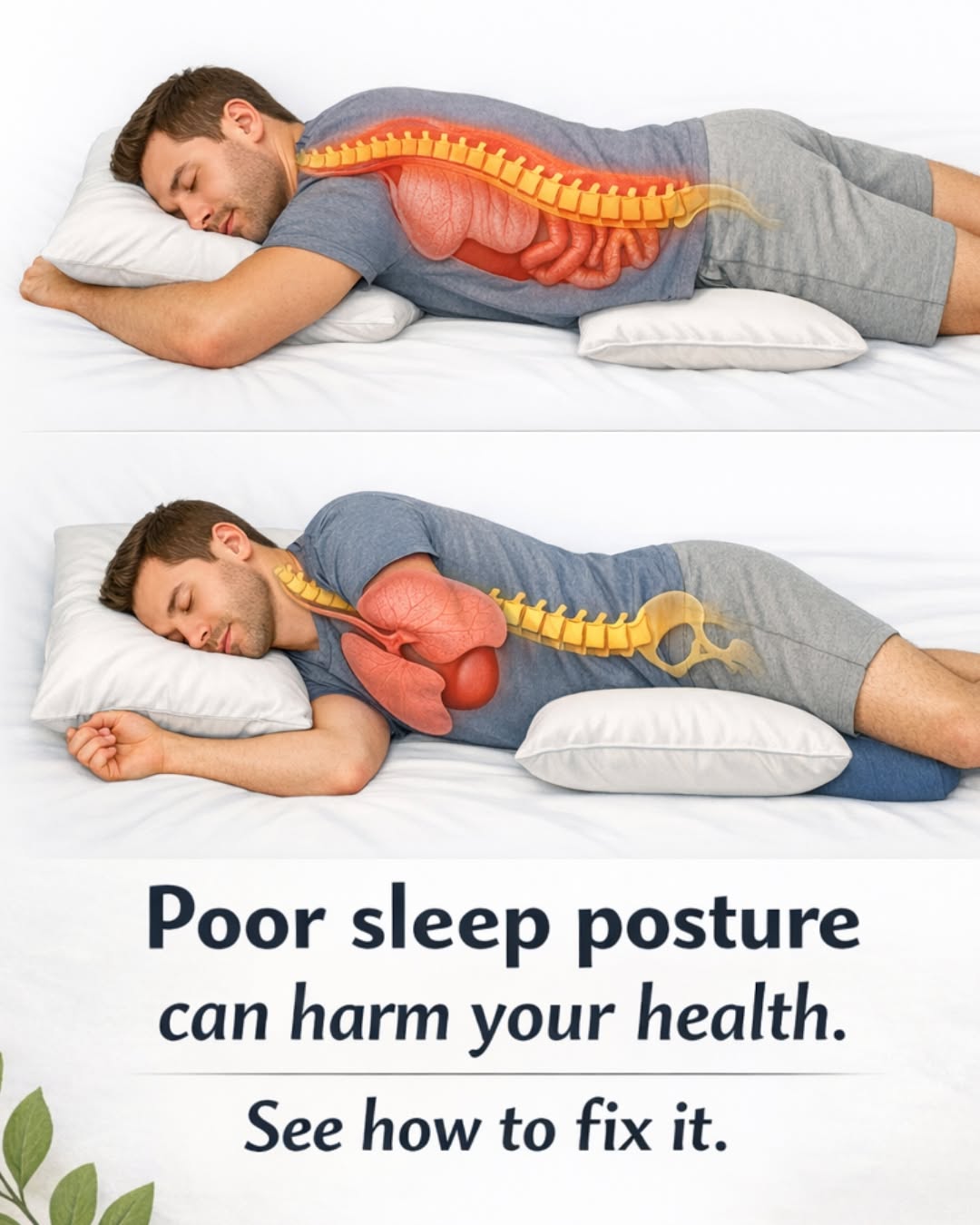
Have you ever noticed how you wake up some mornings feeling refreshed, and on others with a stiff neck, heartburn, or that heavy, tired feeling that just won’t go away? Every night, the same ritual repeats: you get into bed, close your eyes, and hope for a good night’s sleep. You might sleep on your back, on your side, curled up, or face down.
But here’s the part most people don’t think about: the position you sleep in can have a real impact on your health—from digestion and breathing to pain levels and even long-term disease risk.
Sleep isn’t just “turning off” the body. It’s when your body repairs tissues, balances hormones, and resets your brain. If your posture is off for six to eight hours every night, that recovery process can be quietly sabotaged—often without obvious signs at first.
When Your Body Starts Sending Warning Signs
Loud snoring. Morning headaches. Acid reflux. A feeling of suffocation during the night. Waking up tired even after eight hours in bed.
Most people blame stress, a bad mattress, or a busy schedule. And while those can matter, your sleeping position may be the real culprit.
Poor sleep posture can:
Reduce oxygen intake during the night
Increase pressure on your spine and joints
Worsen digestion and reflux
Disrupt deep, restorative sleep phases
Over time, this can turn into chronic back pain, neck problems, persistent fatigue, or worsening sleep disorders like sleep apnea.
Sleeping on Your Left Side: Proven Benefits
This isn’t just advice from yoga instructors. Sleeping on your left side has several science-backed benefits.