4. Assess Shape and Weight
Choose a symmetrical, uniform melon without bumps or dents. It should feel heavy for its size—this usually means a juicy, water-rich interior.
5. Observe the Rind
A ripe watermelon typically has a dull, matte rind. Shiny rinds may suggest the melon isn’t fully ripe yet.
6. Smell the Stem End
A ripe watermelon has a subtle sweet aroma near the stem. No scent? It might not be ripe. Overpowering smell? Possibly overripe.
7. Consider the Season
Watermelons are at their best from May to September, peaking in mid to late summer. Buying in season increases your chances of selecting a ripe, flavorful fruit.
8. Store Properly After Purchase
- Whole watermelons: Keep at room temperature in a cool, dry spot.
- Cut pieces: Store in an airtight container in the fridge and consume within five days.
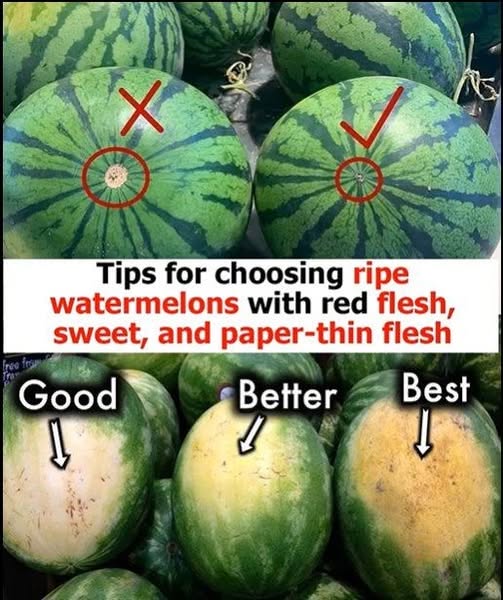
9. Look for Sugar Spots and Pollination Points
- Sugar spots: Dark, crystallized areas indicate natural sweetness.
- Bee stings or small black dots: Signs of strong pollination, usually a tastier fruit.