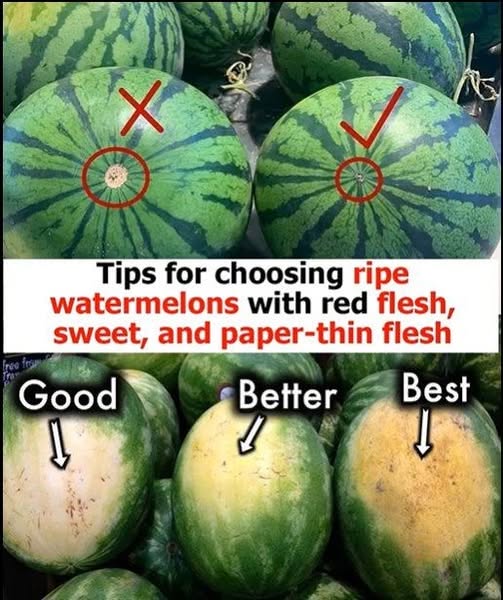
10. Check the Tail or Tendril
If part of the vine is attached:
- Dry, brown tendril: Picked at peak ripeness.
- Green tendril: Harvested too early, possibly less sweet.
11. Opt for Medium-Sized Melons
Medium-sized watermelons often strike the best balance of sweetness and juiciness. Oversized ones can be watery, while smaller ones may be underripe.
12. Prefer Locally Grown Watermelons
Locally grown melons are more likely harvested at peak ripeness. Imported varieties are sometimes picked early to survive transport, which can affect flavor. Bonus: Supporting local farms reduces your environmental footprint.
13. Don’t Rely on Color Alone
Bright green doesn’t always mean sweet. Instead, focus on indicators like the field spot, shape, weight, webbing, and tap sound. The tastiest melons aren’t always the most photogenic.
Final Thoughts: Practice Makes Perfect
Choosing the perfect watermelon takes a little practice. Over time, you’ll get better at spotting the subtle cues that signal ripeness. Test different techniques to see what works best based on your local market or farm.
Whether for a picnic, smoothie, or healthy snack, picking a ripe watermelon ensures you get maximum flavor, juiciness, and nutrition. Next time you’re at the store, use these tips—and enjoy the satisfaction of slicing into a perfectly sweet, red-fleshed melon with a thin, crisp rind.